

A library that starts
Your new library, open in a week
Boxes of books, a computer or a phone, and nobody who has ever run a library. That is all it takes: on Monday you sign it up and on Friday you lend the first book. Free up to 1,000 copies and 150 readers.


The week
- Monday: the library, signed up
Write to us with the name of the school and of whoever will run it, and we sign it up. Once in, the library itself shows you its first day: what to do and in which order.
The guide: Starting the library - Tuesday and Wednesday: the books, by their ISBN
With a barcode scanner or the phone's camera, in batches: the record and the cover come by themselves from libraries all over the world. A book with no ISBN is found by its title or its author, and if the bookshop sends you the ONIX file of the order, all of them come in at once.
- Thursday: the labels and the readers
The labels print on sheets of any brand, with a test sheet to fit them. The readers come from a list, from OneRoster or from your Moodle, each with their class.
The guide: The readers - Friday: the cards, and lending
The cards are printed or carried on the phone. Say how many books and for how many days, open the desk and lend the first one: the card, the book, done.
The guide: The desk
Up to 12


From 12


What it takes
Nothing to install and nothing to buy on top.
- The booksIn boxes, as they come. And if you want more, public domain classics to read online, free, with one tap.
- A computer or a phoneIts camera is enough to read the codes; a barcode scanner is faster, whichever you have.
- A printerFor the labels and the cards. The cards also live on each reader's phone.
- Someone, a while each dayA teacher, an assistant or a group of pupils. Nobody needs to know about libraries: every screen has its «Show me step by step».
Nothing to fear
- Really freeUp to 1,000 copies and 150 readers, with no end date. If the library grows, you move up a plan without redoing anything.
- From day one, for the readersTheir card, their class's island and the books as they arrive, from home and on the phone.
- What you add, showsEach book appears in the catalogue at once, with its cover, and readers can already find it.
- You can always leaveEvery night, a full copy in open formats that any system reads.
Guides to print
Step by step and with the real screens, in PDFs that survive a photocopier.
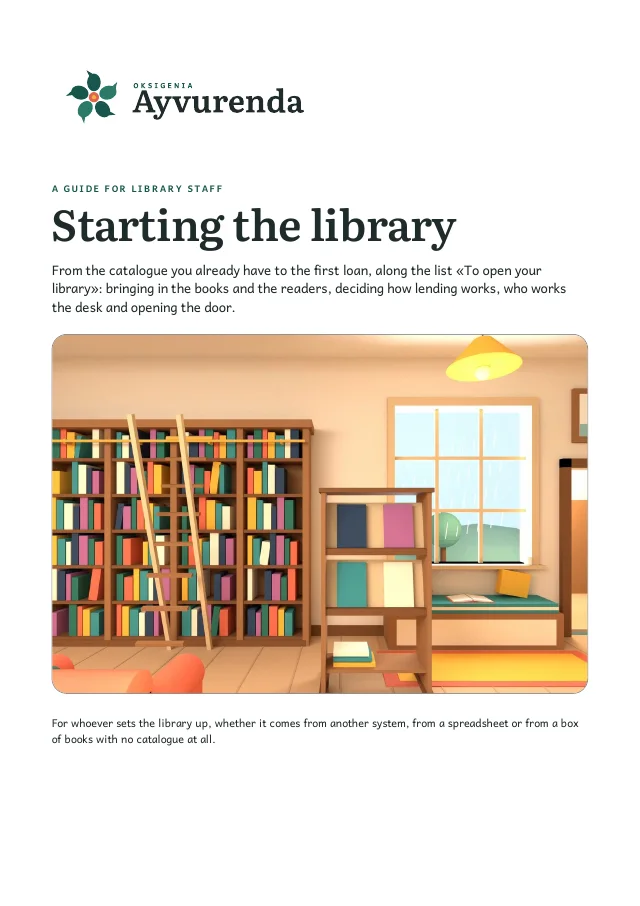
- Starting the library
The catalogue, the readers, the loan rules, the labels and the cards.
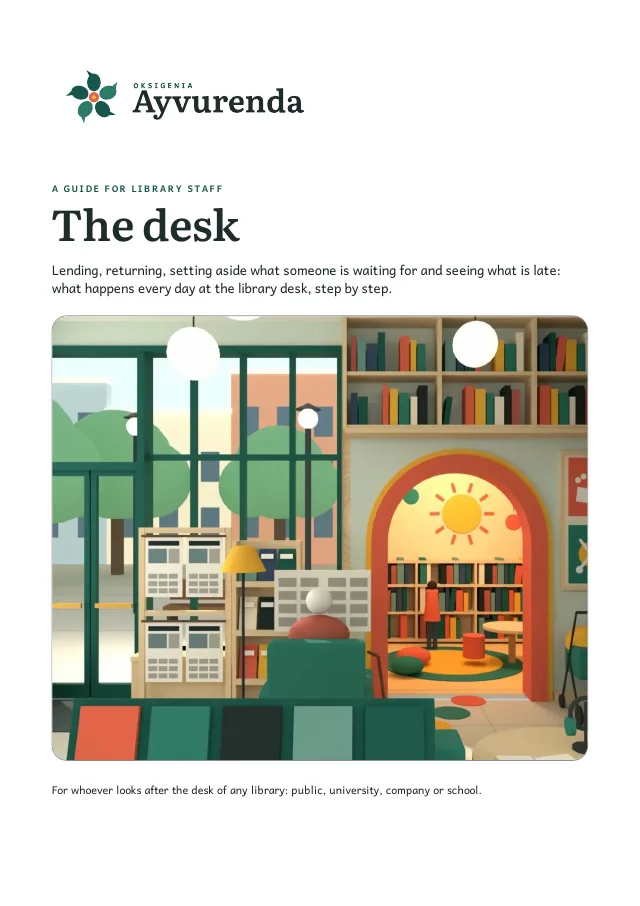
- The desk
Lending, returns, reservations and late books.
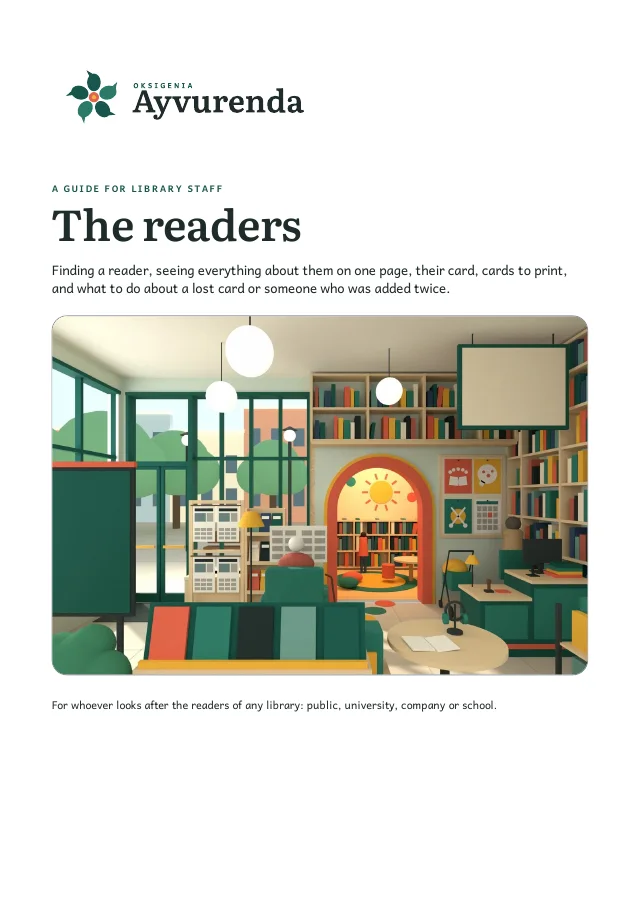
- The readers
Their record, their card, the cards to print and the duplicate readers.
Ask for it, and we start it with you
Write to us with the name of the school and of whoever will run it, and we sign it up on the free plan. If you already have a list of books in a spreadsheet, send it too: we load it for free.
Does your mail not open? Write to contacto@oksigenia.com.
Questions before starting
What if we have no librarian?
You do not need one. The library tells you what to do on the first day and in which order, every screen has its «Show me step by step», and «How do I…?» answers in your own words. The PDF guides go step by step.
What if we have more than 150 pupils or more than 1,000 books?
The Small plan goes up to 5,000 copies and 600 readers for €199 a year, and the Medium one up to 25,000 and 2,500 for €349. If your school has Moodle, Ayvurenda also goes inside it, free and with no limits.
Do we need Moodle?
No. The hosted library works on its own, with its own accounts or signing in with Google or Microsoft. If your school has Moodle, it can go inside.
What about the books with no ISBN?
They are found by their title or their author; and if they do not turn up, they are written by hand with what the cover shows. All of them get their code and their label.
In which languages?
In Spanish, English, Brazilian and European Portuguese, and French: each reader sees it in their own.
What if we already had a list or a system?
Even better: there is no need to start from scratch. Bring your library from anywhere.